
Table of Contents
- Key Takeaways
- What Is Probate Litigation in California?
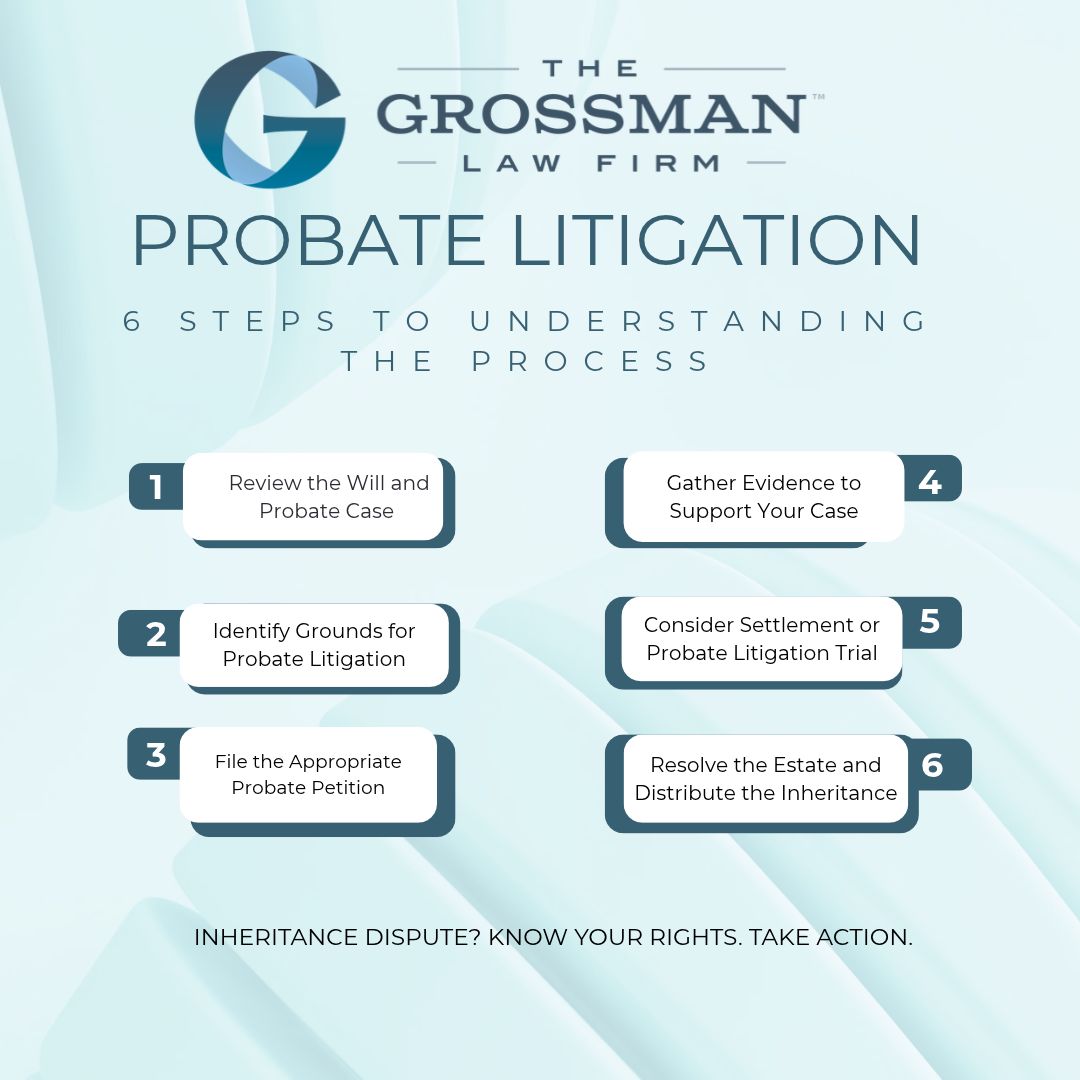
- Step 1: Review the Will and Probate Case
- Step 2: Identify Grounds for Probate Litigation
- Step 3: File the Appropriate Probate Petition
- Step 4: Gather Evidence to Support Your Case
- Step 5: Consider Settlement or Probate Litigation Trial
- Step 6: Resolve the Estate and Distribute the Inheritance
- Can You Pursue Probate Litigation on Contingency?
- FAQ
- Related Resources
- How The Grossman Law Firm Can Help
Key Takeaways
- Probate litigation is litigation relating to wills, the estate property, and the personal representative.
- California law permits an interested party to set a will aside on the grounds of undue influence, fraud, lack of capacity, and so on.
- Certain challenges to the will must be served within 120 days of admission to probate.
- Beneficiaries can apply to the court where an executor is believed to be mismanaging the assets of the estate or failing in their duties.
- Some probate litigation will be eligible for contingency fee representation.
What Is Probate Litigation in California?
Common Reasons Heirs and Beneficiaries File Probate Litigation
- A will that may have been forged or signed under duress.
- An executor who has misused the estate funds.
- A beneficiary who was excluded from the inheritance.
- Missing estate property or unexplained financial transactions.
- Disagreements as to who should be the Executor.
Step 1: Review the Will and Probate Case
What Makes a Will Valid in California?
Step 2: Identify Grounds for Probate Litigation
Grounds for Contesting a Will
- Undue influence: Someone improperly pressured the deceased into changing their will.
- Lack of capacity: The deceased lacked the required mental capacity when making the will.
- Fraud or forgery: Someone used deception or falsified a document.
- Improper execution: The will failed to satisfy applicable legal requirements.
Grounds for Challenging an Executor
Step 3: File the Appropriate Probate Petition
Contesting a Will
Challenging Executor Misconduct
Step 4: Gather Evidence to Support Your Case
Example: An Executor Refuses to Account for Estate Property
Step 5: Consider Settlement or Probate Litigation Trial
Can Probate Litigation Be Settled Without a Trial?
If the dispute cannot be resolved, the court may conduct a trial. Under Probate Code § 8252, the person offering the contested will generally bears the burden of proving proper execution, and the contestant bears the burden of proving grounds such as undue influence, fraud, or incapacity. The court then determines the contested issues and appropriate relief.
Step 6: Resolve the Estate and Distribute the Inheritance
Once the litigation is over, the estate administration can still proceed.
The executor will, of course, have to deal with any outstanding liabilities and will need court approval for the final distribution. Depending on the outcome of the litigation, the court may set aside the will, remove the executor, or order the disposition of estate property. The final distribution depends on the valid governing documents and applicable California law.
Can You Pursue Probate Litigation on Contingency?
FAQ
How Long Does Probate Litigation Take in California?
Can I Sue an Executor for Mismanaging an Estate?
What If I Miss the Deadline to Contest a Will?
Do All Probate Disputes Go to Trial?
Related Resources
- Probate Litigation: A Comprehensive Guide
- What Are an Executor’s Duties in California?
- How to Get a Copy of a Will in California as a Beneficiary?
- How to Contest a Will in California
- Undue Influence in California
- What Is Financial Elder Abuse?
- Can’t Afford Hourly Legal Fees? How a Contingency Fee May Help
- Contingency Fees in California Probate and Trust Litigation